Building a high-converting website is not just a design exercise—it’s a structured process that blends strategy, UX psychology, visual design, and technical execution. In 2026, the most successful websites are not necessarily the most visually complex, but the most intent-aligned and friction-free.
This step-by-step guide walks through the full process: planning, wireframing, UI design, and development—focused on building websites that don’t just look good, but convert.
Step 1: Define the Conversion Goal and User Intent
Before any design work begins, the first question is simple: what is the website supposed to achieve?
Common conversion goals:
- Product purchase
- Lead generation
- App sign-ups
- Bookings or appointments
- Content engagement (ads/subscriptions)
Understand user intent:
Every visitor arrives with a different mindset:
- Transactional intent → ready to buy
- Comparative intent → evaluating options
- Informational intent → researching
- Navigational intent → looking for a specific brand/page
Why this matters:
A high-converting website aligns its structure to intent, not just aesthetics.
Step 2: Research and Positioning
Strong conversion starts with clarity in positioning.
Key research areas:
- Competitor websites (what they do well/poorly)
- Target audience behavior patterns
- Market expectations for your category
- Pricing psychology and value perception
Positioning questions:
- Why should users choose you over alternatives?
- What problem are you solving better than others?
- What makes your offer instantly understandable?
Key insight:
If users don’t understand your value in 5–10 seconds, conversion drops dramatically.
Step 3: Information Architecture (IA)
Information architecture defines how content is structured and accessed.
Core structure elements:
- Homepage (value + overview)
- Product/service pages
- Pricing or conversion page
- About page (trust building)
- Support or FAQ section
Best practices:
- Keep navigation minimal and focused
- Prioritize high-intent pages in menu structure
- Reduce unnecessary paths to conversion
- Use clear labeling (avoid vague terms like “Solutions” without context)
Example structure for SaaS:
- Home
- Features
- Pricing
- Docs / Help
- Sign up
Step 4: Wireframing (Low-Fidelity Layout Planning)
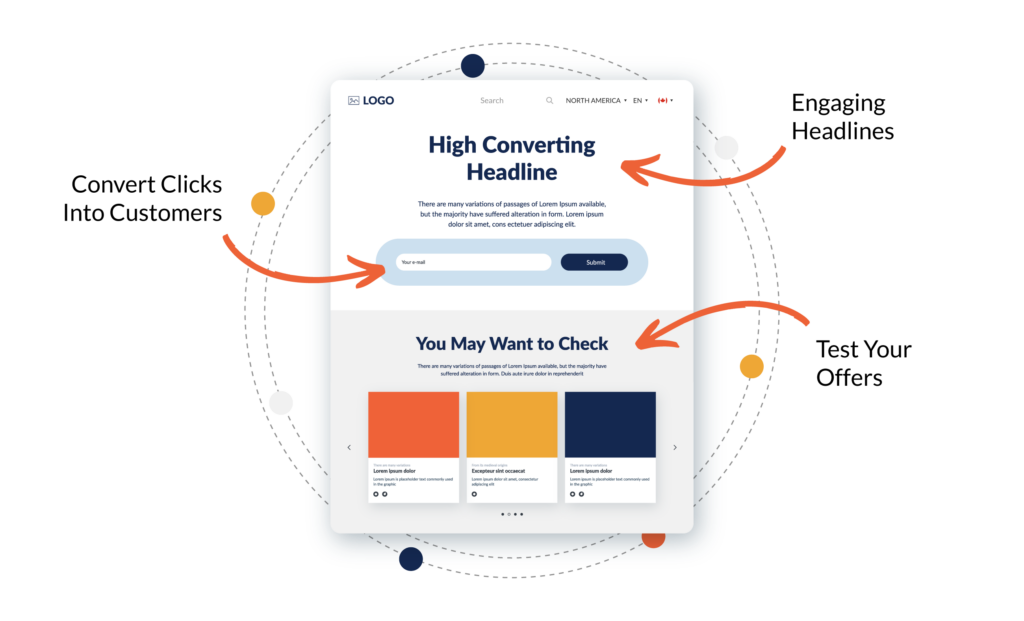
Wireframing is where conversion strategy becomes visual structure.
What wireframes focus on:
- Layout hierarchy
- Content placement
- User flow paths
- CTA positioning
- Section prioritization
High-converting wireframe principles:
1. Above-the-fold clarity
- Clear headline
- Subheading explaining value
- Primary call-to-action immediately visible
2. Logical scroll progression:
- Problem → solution → proof → action
3. Reduced decision friction:
- Avoid overwhelming users with too many options
- Focus each section on one message
Key insight:
Wireframes are about behavior design, not aesthetics.
Step 5: UX Structure and Conversion Psychology
This is where design starts directly influencing conversion rates.
Core psychological triggers:
1. Social proof
- Testimonials
- User counts
- Case studies
- Reviews
2. Authority signals
- Certifications
- Brand partnerships
- Media mentions
3. Risk reduction
- Free trials
- Money-back guarantees
- Transparent pricing
4. Scarcity and urgency (use carefully)
- Limited offers
- Time-sensitive deals
Conversion structure formula:
Attention → Interest → Trust → Action
Step 6: UI Design (High-Fidelity Visual Design)

UI design translates structure into a polished experience.
Key design principles for conversion-focused UI:
1. Strong visual hierarchy
- Headlines must dominate
- CTAs must be visually distinct
- Secondary content should not compete
2. Minimal cognitive load
- Avoid cluttered sections
- Use whitespace strategically
- Group related information clearly
3. Typography-first design
- Clear font hierarchy improves readability
- Avoid excessive font variations
- Maintain consistent spacing systems
4. Color psychology
- Primary color for actions
- Neutral palette for background content
- High contrast for readability
Step 7: High-Converting CTA Design
Calls-to-action are the most important element of the entire website.
Effective CTA principles:
- Use action-oriented language (“Get Started”, “Try Free”)
- Keep CTAs visually consistent across pages
- Place CTAs at multiple strategic points
- Reduce friction (fewer fields = higher conversion)
Common CTA placements:
- Hero section
- Mid-scroll after value explanation
- After testimonials or proof sections
- Footer as final conversion opportunity
Step 8: Development and Performance Optimization
Even the best design fails if performance is poor.
Core development priorities:
1. Speed optimization
- Image compression
- Lazy loading
- Efficient code structure
- Minimal third-party scripts
2. Mobile-first responsiveness
- Adaptive layouts for small screens
- Touch-friendly interactions
- Simplified navigation for mobile users
3. SEO-friendly structure
- Proper heading hierarchy
- Semantic HTML elements
- Clean URL structure
- Fast loading times
Key insight:
A one-second delay in load time can significantly reduce conversion rates.
Step 9: Trust, Security, and Credibility Signals
Users convert only when they feel safe.
Essential trust elements:
- SSL security indicators
- Privacy policy transparency
- Real testimonials and reviews
- Clear contact information
- Recognizable brand signals
For e-commerce specifically:
- Return policy clarity
- Shipping transparency
- Secure payment badges
Step 10: Testing and Continuous Optimization
A high-converting website is never “finished.”
Key testing methods:
- A/B testing headlines and CTAs
- Heatmap analysis of user behavior
- Session recordings for friction detection
- Funnel analysis for drop-off points
What to optimize continuously:
- Landing page messaging
- CTA placement and wording
- Form length and structure
- Page load performance
- Navigation clarity
Step 11: Scaling Conversion Through Iteration
Once baseline performance is stable, focus shifts to scaling.
Scaling strategies:
- Personalize landing pages for different traffic sources
- Create variant pages for different user segments
- Optimize for returning visitors separately
- Expand content for SEO-driven conversions
Key insight:
Conversion optimization is not a one-time project—it’s an ongoing system.
Common Mistakes That Reduce Conversion Rates
- Overcomplicated navigation
- Weak or unclear value proposition
- Too many CTAs competing on one page
- Slow loading performance
- Lack of trust signals
- Ignoring mobile UX entirely
Final Insight
Building a high-converting website is not about adding more features or design complexity. It’s about removing friction at every step of the user journey.
The most effective websites in 2026 share a common structure:
- Clear intent alignment
- Simple, focused information architecture
- Strong visual hierarchy
- Fast, responsive performance
- Continuous optimization through data
In the end, conversion is not a design layer—it is the outcome of every decision made from planning to deployment.
Other Articles

How AI Is Reshaping Web Design in 2026